Wednesday, January 31, 2018

Walden and Song of Myself

February 1, 2018

CCSS.ELA-LITERACY.RL.11-12.9
Demonstrate knowledge of eighteenth-, nineteenth- and early-twentieth-century foundational works of American literature, including how two or more texts from the same period treat similar themes or topics.

EQ: Analyze major themes from the transcendental time period. 

Starter: 


Connect the ideas to the central ideas we have been discussing 
Use lyrics to support conclusions.
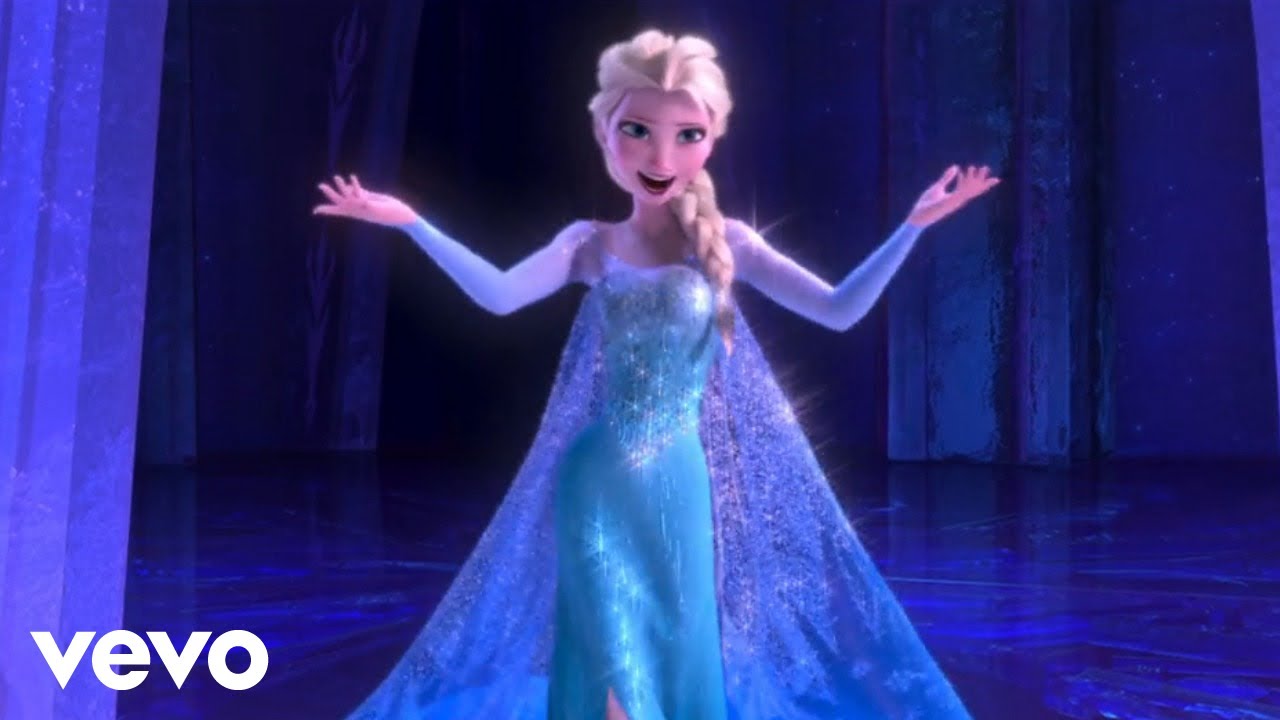
Image result for let it go


Vocabulary: 

Word; Individual
Part of Speech; Noun
Dictionary Definition: a single human being, distinguished from a group
Your Definition: 
Activity: Describe how you are an individual.

Activity: 

1.   Song of Myself and Walden Comparison

In a TPEQEQEA paragraph compare the themes in Song of Myself and Walden.

Remember, to find the theme try to summarize the piece and find a topic word to expand on.


Class Code: HZCZVC

2.  Peer Edit 

Create a DWC for your peer to give you feedback on.

Closure: 

Explain whether or not you agree or disagree with the ideas in these two pieces.

Tuesday, January 30, 2018

Walden

January 31, 2018

CCSS.ELA-LITERACY.RL.11-12.9
Demonstrate knowledge of eighteenth-, nineteenth- and early-twentieth-century foundational works of American literature, including how two or more texts from the same period treat similar themes or topics.

EQ: Analyze major themes from the transcendental time period. 

Starter: 

Based on your notes, identify a theme of Song of Myself.
Explain how this theme is evident in the writing.

Image result for song of myself

Vocabulary: 

Word: Central idea
Part of Speech: Noun
Dictionary Definition:  the central, unifying element of the story, which ties together all of the other elements of fiction used by the author to tell the story.
Your Definition: 
Activity:  Describe the central idea of your favorite book, movie, TV show, etc.

Image result for theme vs central idea

Activity: 

1.  Walden

Read and annotate Walden.

Once you are done reading find three quotes that you found interesting.
Write the quote down and then write a few sentences explaining why you chose that quote—what it meant to you, reminded you of, etc. You may have connect it to something that happened to you in your own life, to a film or book they saw or read, or to something that happened in history or is happening in current events.

Divide the students into groups of three, labeling one student A, one B, and the other C in each group. Invite the A students to read one of their chosen quotations to their group. Then students B and C discuss the quotation. What do they think it means? Why do they think these words might be important? To whom? After several minutes, ask the A students to read the back of their card (or to explain why they picked the quotation), thus having “the last word.” This process continues with the B students sharing and then the C students.

Finally, we will discuss these ideas as a class.

2.  Think Questions

Answer questions 1-3 on page 134.  

Closure

What is one quote that you found most interesting and why?

Monday, January 29, 2018

Song of Myself

January 30, 3018

CCSS.ELA-LITERACY.RL.11-12.9
Demonstrate knowledge of eighteenth-, nineteenth- and early-twentieth-century foundational works of American literature, including how two or more texts from the same period treat similar themes or topics.

EQ: Analyze major themes from the transcendental time period. 

Starter: 

“AND IT MAKES ME WONDER” QUESTION:
 Anything you want so long as it’s interesting. Not plot-based boring stuff, but something cool and relevant. 

Create your own Makes Me Wonder question about Song of Myself. 

Related image

Vocabulary: 


Word: Theme
Part of Speech: Noun
Dictionary definition: the subject of a talk, a piece of writing, a person's thoughts, or an exhibition; a topic
Your Definition: 
Activity: Identify a theme from your favorite book.

Activity: 

1.  Song of Myself Sections

Each table will be assigned a section from the poem Song of Myself.

With your table, create a 3-5 sentence objective summary of the section.
Then, select a topic word that represents the ideas.
Finally, select a quote that you believe best represents the section as a whole.

2.  Think Questions

With a partner, answer questions 1-5 on page 129.

3.  Main Idea  and Theme 

Click on the link for the main idea and take notes on how to find it.
Then, read through the Literary Element of Theme, taking notes when necessary.
Closure: 

Identify a potential main idea and  theme of Song of Myself.
Explain.

Friday, January 26, 2018

Transcendentalism Introduction

January 29, 2018

CCSS.ELA-LITERACY.RL.11-12.9
Demonstrate knowledge of eighteenth-, nineteenth- and early-twentieth-century foundational works of American literature, including how two or more texts from the same period treat similar themes or topics.

EQ: Analyze major themes from the transcendental time period. 

Starter: 

Reflect back on Fridays seminar. 
Write a 5 sentence reflection on the quality of the seminar.
Consider your performance, class participation, questions, etc. 

Image result for reflection quotes

Vocabulary: 

Word: Transcendentalism
Part of Speech: Noun
Dictionary Definition: an idealistic philosophical and social movement that developed in New England around 1836 in reaction to rationalism. Influenced by romanticism, Platonism, and Kantian philosophy, it taught that divinity pervades all nature and humanity, and its members held progressive views on feminism and communal living. Ralph Waldo Emerson and Henry David Thoreau were central figures.
Your Definition: 
Activity: Connect modern day ideas to those held during the transcendental period.

Image result for define transcendentalism
Activity: 


Identify the five main ideas from the video.


You will complete the handout individually.
For each idea, find an example from a book, movie, TV show, etc.
Make sure to explain the meaning in detail.
We will share some of our ideas to the class. 

3.  Song of Myself

First Read.
Annotate the poem Song of Myself pages 125-129 

Discussion
What lines stood out to you?
What does it mean to "celebrate myself?"
What are the major underlying ideas and themes?
What is the significance of this poem coming after the Declaration of Independence?

Second Read
Answer the think questions on page 129.

Closure: 
What are two things you learned about yourself and transcendentalism today?

Thursday, January 25, 2018

Socratic Seminar

January 26, 2018

CCSS.ELA-LITERACY.SL.11-12.1
Initiate and participate effectively in a range of collaborative discussions (one-on-one, in groups, and teacher-led) with diverse partners on grades 11-12 topics, texts, and issues, building on others' ideas and expressing their own clearly and persuasively.

EQ: Express your own ideas and respond to others regarding human rights and global issues. 

Starter: 

Free Write Friday 

Image result for tumblr writing prompts

Vocabulary: 

Word; Human Right
Part of Speech: Noun
Dictionary Definition: a right that is believed to belong justifiably to every person
Your Definition: 
Activity: Create a small list of examples.

Image result for define human right

1.  Socratic Seminar


Topic

Human Rights
What are our human rights?
(Consider what is stated in the Declaration of Independence and the Universal Declaration of Human Rights.)
Evaluate whether or not these human rights are adequately present in society today.
Connect these rights to personal, national, and global issues. 
Create potential steps to help protect our rights and resolve issues.


Image result for socratic seminar rules

Closure


Reflection

Write a five sentence reflection based on the seminar.
Consider your overall participation, level of questioning, focus, connection, quality, etc.

Wednesday, January 24, 2018

Rhetoric Presentations

January 25, 2018

Standard: 

CCSS.ELA-LITERACY.SL.11-12.4
Present information, findings, and supporting evidence, conveying a clear and distinct perspective, such that listeners can follow the line of reasoning, alternative or opposing perspectives are addressed, and the organization, development, substance, and style are appropriate to purpose, audience, and a range of formal and informal tasks.

EQ: Present propaganda that is appropriate for purpose and audience.

Starter: 

Complete the project reflection handout. 

Image result for reflection quotes

Vocabulary: 

Word; Human Right
Part of Speech: Noun
Dictionary Definition: a right that is believed to belong justifiably to every person
Your Definition: 
Activity: Create a small list of examples.

Image result for define human right

Activity: 

1.  Presentations

You will present your propaganda in small groups. 
Take turns sharing your ideas and visual.
Remember to use those rhetorical techniques during the presentation!

2. Socratic Seminar Prep 

Topic

Human Rights
What are our human rights?
(Consider what is stated in the Declaration of Independence and the Universal Declaration of Human Rights.)
Evaluate whether or not these human rights are adequately present in society today.
Connect these rights to personal, national, and global issues. 
Create potential steps to help protect our rights and resolve issues.


Questions to Ask

WORLD CONNECTION QUESTION:
 Write a question connecting the text to the real world. 
 Example: If you were given only 24 hours to pack your most precious belongings in a back pack and to get ready to leave your home town, what might you pack? (After reading the first 30 pages of NIGHT).

OPEN-ENDED QUESTION: 
 Write an insightful question about the text that will require proof and group discussion and "construction of logic" to discover 
Example: How does the story represent the experience of women in the post-Civil War South? (From “A Rose for Emily” by Faulkner

“AND IT MAKES ME WONDER” QUESTION:
 Anything you want so long as it’s interesting. Not plot-based boring stuff, but something cool and relevant. 
 Example: After reading A Tale of Two Cities-I found myself uncomfortably comfortable with Madam Defarge’s need for revenge. I know it hurt the Darnay’s and that it was unjust, but I understood why she did it and can totally understand why she does what she does. Did you guys ever find yourselves feeling sympathetic for a character or cause within the novel that you feel like you shouldn’t have?

Closure:
3 things you learned during the presentations.
2 shout outs for classmates
1 question you have


Tuesday, January 23, 2018

Peer Review

Standard:

Write arguments to support claims in an analysis of substantive topics or texts, using valid reasoning and relevant and sufficient evidence.
Introduce precise, knowledgeable claim(s), establish the significance of the claim(s), distinguish the claim(s) from alternate or opposing claims, and create an organization that logically sequences claim(s), counterclaims, reasons, and evidence.
Develop claim(s) and counterclaims fairly and thoroughly, supplying the most relevant evidence for each while pointing out the strengths and limitations of both in a manner that anticipates the audience's knowledge level, concerns, values, and possible biases.
Use words, phrases, and clauses as well as varied syntax to link the major sections of the text, create cohesion, and clarify the relationships between claim(s) and reasons, between reasons and evidence, and between claim(s) and counterclaims.
Establish and maintain a formal style and objective tone while attending to the norms and conventions of the discipline in which they are writing.
Provide a concluding statement or section that follows from and supports the argument presented.
E.Q: Create an effective and persuasive argument based on important global issue.
Starter: 
Creative Concern
Create a question or concern you would like a peer to give you feedback on for your project.


Vocabulary: 
Word: Rhetoric
Part of Speech: Noun
Dictionary Definition: the art of effective or persuasive speaking or writing, especially the use of figures of speech and other compositional techniques.
Your Definition: 
Activity: What is one thing you remember about rhetoric from last year?

Activity: 


Complete the handout based on another peer's project. 

2.  MLA Citations Resources

Continue working on the project you started yesterday.
Make sure to complete the research log!

Research Log 

Closure:

Write yourself a plus and delta regarding your ability to work in class. 

Monday, January 22, 2018

Rhetoric Work Day Two

Standard:

Write arguments to support claims in an analysis of substantive topics or texts, using valid reasoning and relevant and sufficient evidence.
Introduce precise, knowledgeable claim(s), establish the significance of the claim(s), distinguish the claim(s) from alternate or opposing claims, and create an organization that logically sequences claim(s), counterclaims, reasons, and evidence.
Develop claim(s) and counterclaims fairly and thoroughly, supplying the most relevant evidence for each while pointing out the strengths and limitations of both in a manner that anticipates the audience's knowledge level, concerns, values, and possible biases.
Use words, phrases, and clauses as well as varied syntax to link the major sections of the text, create cohesion, and clarify the relationships between claim(s) and reasons, between reasons and evidence, and between claim(s) and counterclaims.
Establish and maintain a formal style and objective tone while attending to the norms and conventions of the discipline in which they are writing.
Provide a concluding statement or section that follows from and supports the argument presented.
E.Q: Create an effective and persuasive argument based on important global issue.
Starter: 
Creative Concern
Create a question or concern you would like me to give you feedback on for your project.
I will meet with you one-on-one to address these. 
Vocabulary: 

Word: Rhetoric
Part of Speech: Noun
Dictionary Definition: the art of effective or persuasive speaking or writing, especially the use of figures of speech and other compositional techniques.
Your Definition: 
Activity: What is one thing you remember about rhetoric from last year?

Activity: 

1.  MLA Citations Resources

Continue working on the project you started yesterday.
Make sure to complete the research log!

Research Log 

Closure:

Write yourself a plus and delta regarding your ability to work in class. 

Tuesday, January 16, 2018

Rhetoric Work Day


January 17, 2018

Standard:

Write arguments to support claims in an analysis of substantive topics or texts, using valid reasoning and relevant and sufficient evidence.
Introduce precise, knowledgeable claim(s), establish the significance of the claim(s), distinguish the claim(s) from alternate or opposing claims, and create an organization that logically sequences claim(s), counterclaims, reasons, and evidence.
Develop claim(s) and counterclaims fairly and thoroughly, supplying the most relevant evidence for each while pointing out the strengths and limitations of both in a manner that anticipates the audience's knowledge level, concerns, values, and possible biases.
Use words, phrases, and clauses as well as varied syntax to link the major sections of the text, create cohesion, and clarify the relationships between claim(s) and reasons, between reasons and evidence, and between claim(s) and counterclaims.
Establish and maintain a formal style and objective tone while attending to the norms and conventions of the discipline in which they are writing.
Provide a concluding statement or section that follows from and supports the argument presented.
E.Q: Create an effective and persuasive argument based on important global issue.
Starter: 
Create a SMART goal for today's class.
Consider what pieces of the project you want to work on.

Image result for smart goals
Vocabulary: 

Word: Rhetoric
Part of Speech: Noun
Dictionary Definition: the art of effective or persuasive speaking or writing, especially the use of figures of speech and other compositional techniques.
Your Definition: 
Activity: What is one thing you remember about rhetoric from last year?

Activity: 

1.  MLA Citations

Continue working on the project you started yesterday.
Make sure to complete the research log!

Research Log 

Closure:

Evaluate your effectiveness in completing your SMART goal from the starter.